

Mongolian Herders: Nature’s Stewards on the Frontline of Climate Change
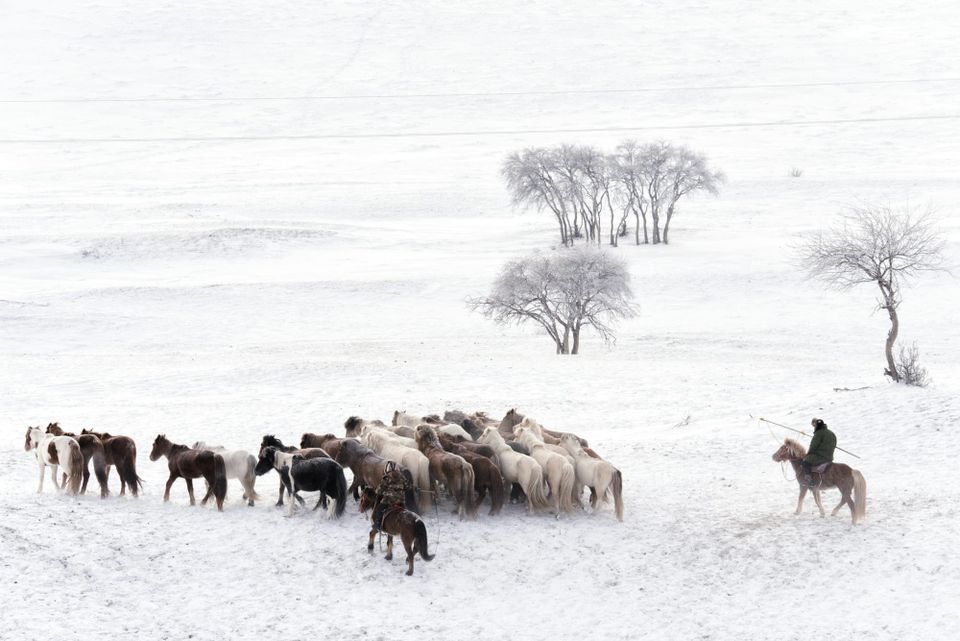
This is the fourth and last article of our Grasslands blog series. The previous articles explored the climate potential of grasslands and how we can protect, restore, and manage these crucial ecosystems through science and technology.

How can you understand the reality of climate change beyond news headlines and statistics? How do you feel it?
Most of us experience climate change as a pattern, unsettling news, a summer that runs too long, or a winter jacket that no longer feels right for the season. For Gundaa, a lifelong herder in Bayankhongor Province, it has been something far more immediate: a slow rewriting of everything he thought he knew about the land he lives on.
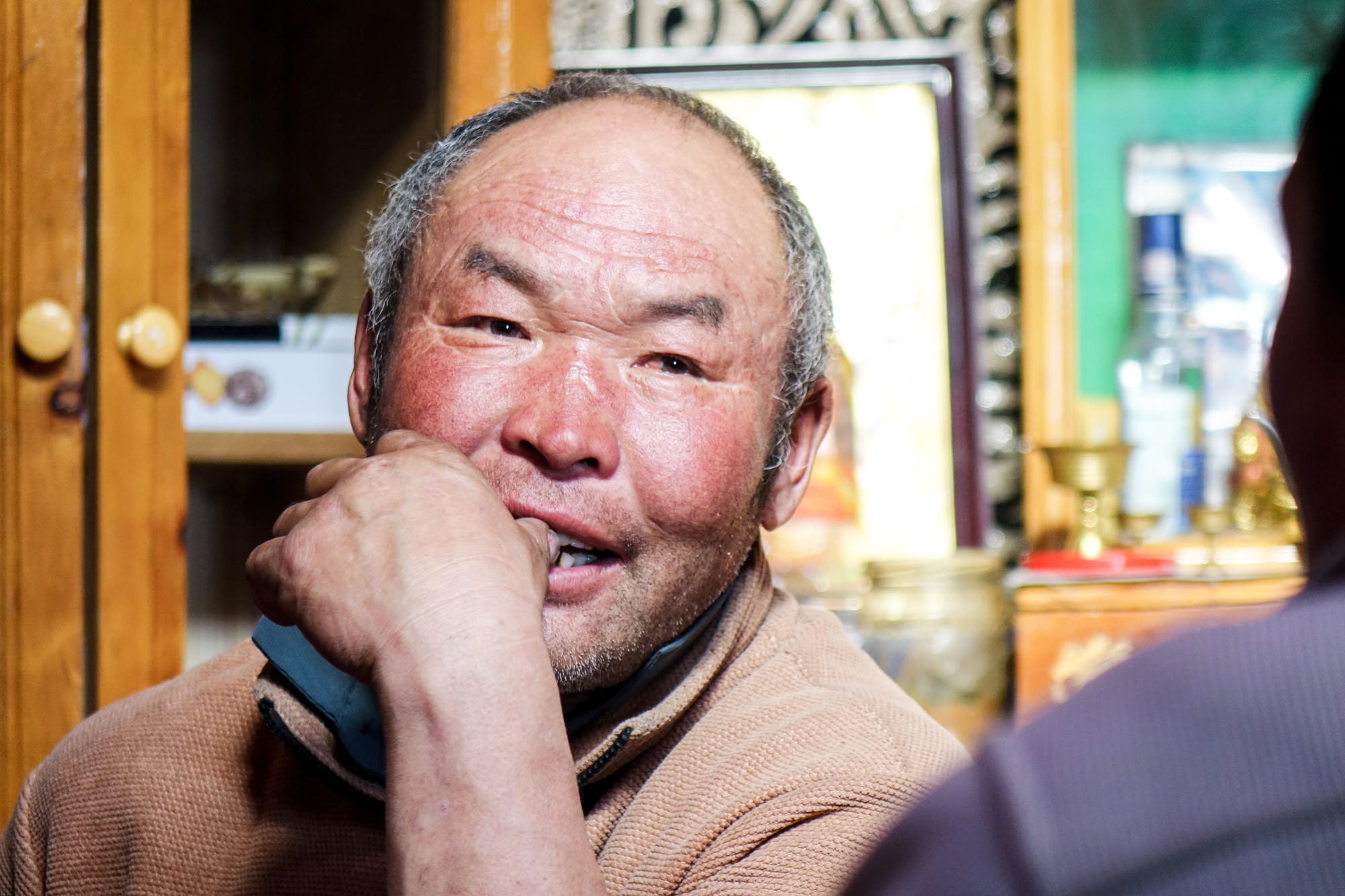
Gundaa has spent decades learning to read the land. He knows which valleys hold water longer than they should, which slopes the wind now strips bare in storms it once passed through gently. He can feel the difference in how his animals graze, in how quickly a pasture wears out. This is the kind of understanding that only comes from watching the same landscape for a very long time, and paying close attention when it starts to change.
During winter, the stars gave signals: when they burned bright and clustered close to the moon, colder weather was coming. When animals wandered unusually early in the morning — restless, moving before they normally would — a storm usually followed within a day or two. This traditional knowledge had been passed down and refined across generations, and for most of Gundaa's early life, it worked.
Then, sometime around 2001, it stopped being quite enough.
A climate that broke its rhythm
After the drought of 1999, something shifted. Driven by climate change, the weather became drier and harder to read. Stronger winds arrived. Dust storms that would have been unusual became routine. The cold, when it came, came suddenly.
"A dzud event used to happen once every ten years. Now it comes every four years. Around 2027 or 2028 may be very difficult for us." - Gundaa
The traditional signs were still there, but the climate they pointed to was no longer the same one Gundaa had learned to navigate. And nowhere was that gap more visible than in the winter that would define the next decade of his life.
The winter that changed everything
Among all the difficult years, the dzud of 2000 stands apart. Gundaa owned more than 400 animals going into that winter. By spring, roughly 70 percent of them were lost to frost and starvation. What followed was nearly a decade of patience with only a handful of surviving breeding animals as the foundation for everything that came next.
Recovery during a crisis like this rarely happens alone. Relatives, neighboring families, aid organizations, and the Red Cross all played a role. Herders in Gundaa's area contribute to informal emergency funds each year, around 50,000 tugriks per household, a quiet form of mutual insurance woven into community life long before any formal system existed.
By 2016, Gundaa had rebuilt his herd to around 1,000 animals. But even as he recovered, the underlying problem had not gone away. If anything, it had grown.
800 kilometers in search of grass
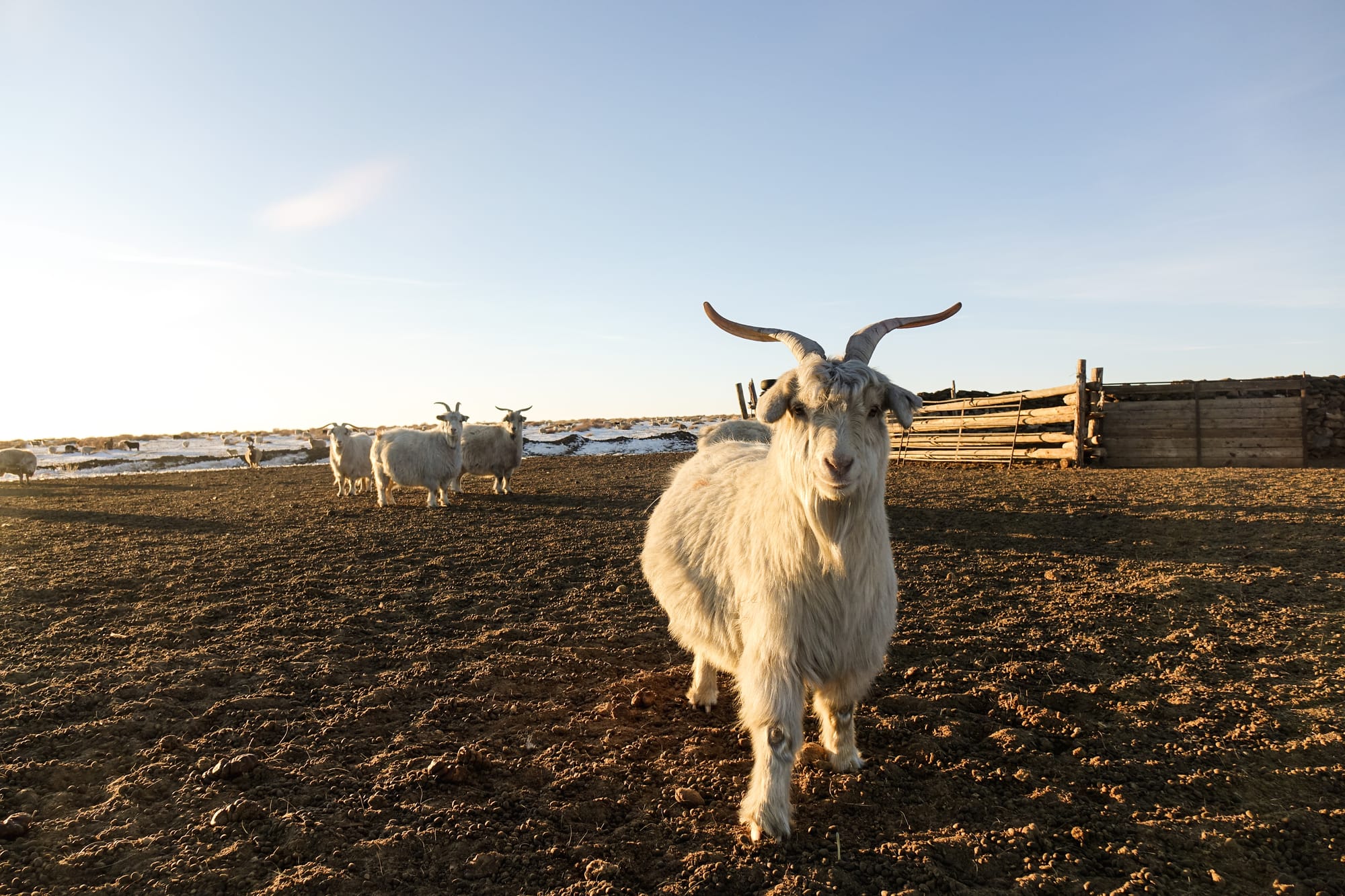
In 2020, facing another difficult season and dwindling pasture close to home, Gundaa made a difficult decision: he reduced his herd by more than 400 animals and began what would become the longest migration of his life.
An otor is a traditional Mongolian emergency, long-distance pastoral movement in search of abundant pastures, which are often outside their local district. The otor movement occurs more frequently during dzud events or severe droughts.
Starting in Bayankhongor to Selenge Province, he traveled through Uvurkhangai, Tuv, and Bulgan, covering a distance of nearly 800 kilometers transported by truck, with total migration cost exceeding 20 million tugriks in for the round trip. Other families from his area spread across Dornogovi, Dundgovi, Arkhangai, and Sukhbaatar.
Selenge was a completely different environment from the semi-desert steppe Gundaa knew. The grass looked similar, but behaved differently. In the Gobi, livestock digested between 60 and 90 percent of what they eat; in Selenge's mountain pastures, that figure dropped to around 30 percent. Nutritious-looking grass that didn't actually nourish the way it appeared. Herders arriving from other provinces also had no local land rights to stay for long.
In Mongolia, rangelands are owned by the state, but herders have customary use rights. The recent shift toward formal five-year contracts, signed with district governors, gives herder groups the legal standing to rest and rotate pastures without other users moving in. Without that protection, sustainable grazing management is nearly impossible in practice.
The migration worked — at great cost. But it also made something clear: managing these risks one family at a time, by instinct and necessity, was no longer enough. What Gundaa and herders like him needed was better information, and a way to act on it together.
From tradition to tech: The new stewardship
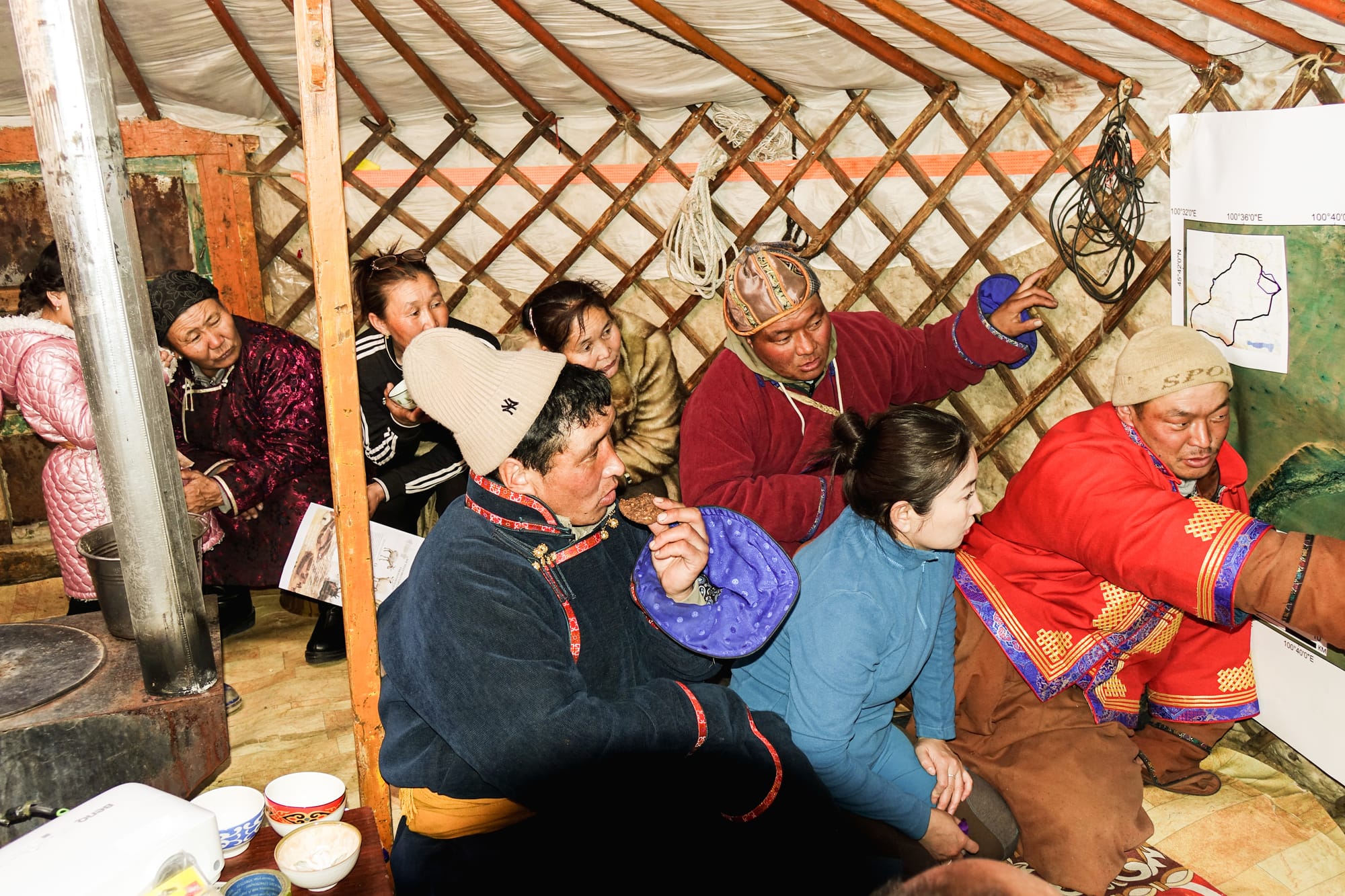
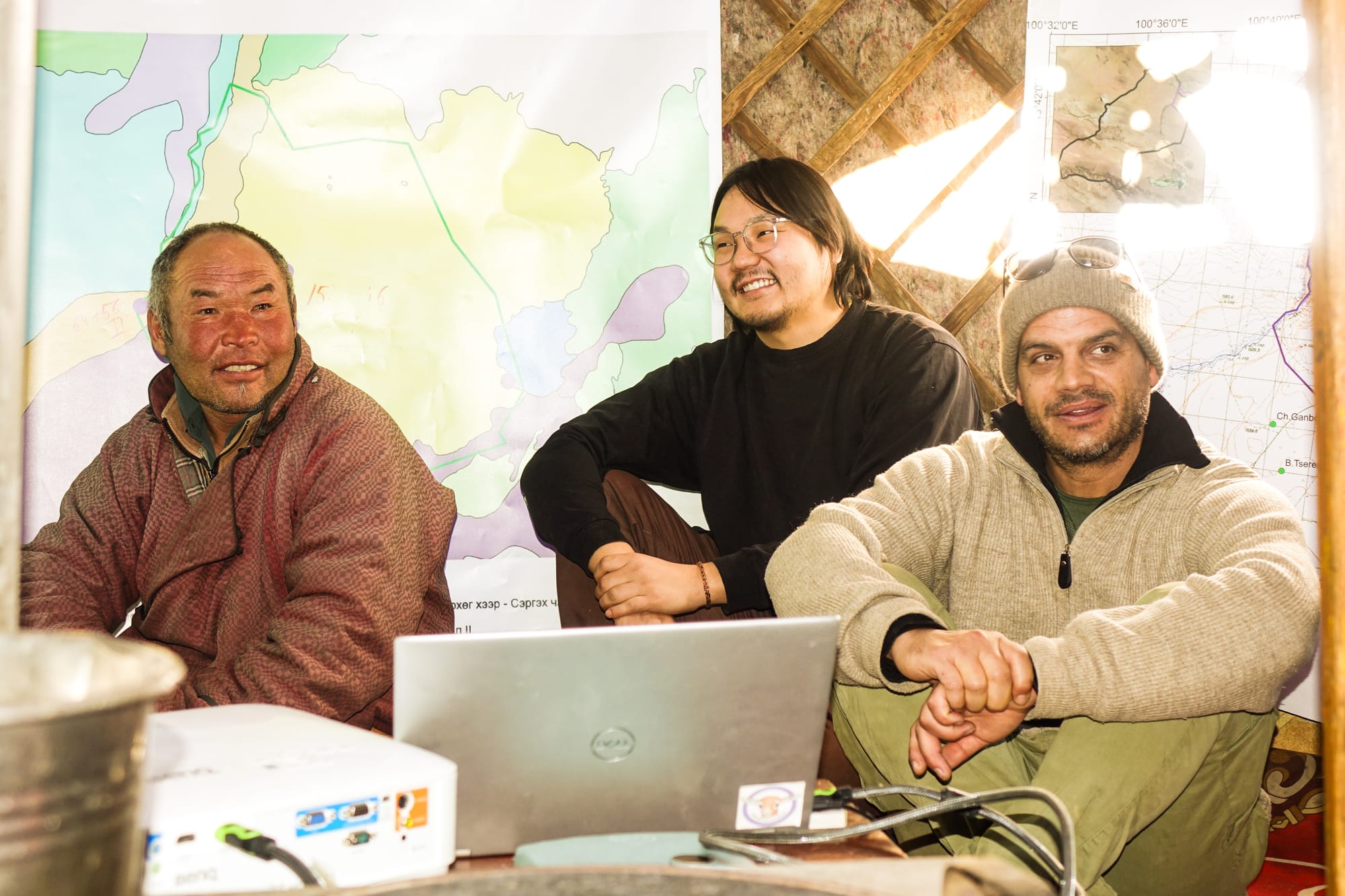
Every year, Gundaa attends two or three training sessions, learning tangible prediction, practical knowledge he has always managed by feel.
"Satellite images sometimes differ from reality. It is hard to distinguish nutritious plants from low-quality ground vegetation," Gundaa notes — which is exactly why the photo monitoring, taken at ground level by the herders themselves, provides the granularity that remote sensing data sometimes cannot.
The photo monitoring, conducted through a mobile application developed by URECA in collaboration with Good Growth, will also serve as crucial data for the machine learning model for plant recognition.
Gundaa's herder group began using photo monitoring to systematically track pasture conditions — the same locations, photographed season after season. For the first time, herders had documented evidence of how their land was changing over time, and a shared basis for making collective decisions about rotation schedules, rest periods, and how many animals each pasture could actually sustain.
The change in daily practice has been concrete. Gundaa's group now follows an agreed seasonal rotation — a shared calendar built on the combination of traditional wisdom and observed data about what each pasture can sustain and when it needs rest.
Before, there were no fixed dates: Movement was guided by habit, and one family's decision to graze earlier could quietly undermine a neighbour's rest period. In a community where everyone has known each other for generations, enforcing that kind of boundary is often avoided; it risks turning a practical disagreement into a personal one. What the URECA data changed was not just the calendar, but the nature of the conversation. When the evidence comes from outside the group, the rules feel less like one neighbour telling another what to do, and more like a shared obligation to something bigger than any one family's immediate need.
Different approach, improved preparation
Despite everything, Gundaa believes preparation has genuinely improved. He watches summer rainfall carefully — a good summer means he starts planning for winter early, selling animals to reduce his herd size and using the income to buy hay before prices rise. He knows that dzuds now tend to hit large regions at once, which makes early, wide-ranging migration a better strategy than waiting to see how bad things get locally. The shared monitoring data from URECA has made it easier to spot those regional patterns across herder groups — to see, together, what no single family could see alone.
Still, major challenges remain. More reliable province-wide data on summer conditions would help families make better decisions about autumn migration routes and timing. Market access is another persistent obstacle. Many herders are forced to keep animals longer than they want or sell them at heavy losses once a crisis has already begun. Easier access to markets would give families more flexibility to act early, before extreme weather turns preparation into emergency response.
"Good Growth's approach works: when income is stable, we're better prepared for the winter. We can manage sales ourselves if markets are open." - Gundaa
The legacy of a nature’s steward
Looking back on his life, Gundaa takes pride in what he has achieved through herding. Since starting in 1994, he has supported his family entirely through livestock. Three of his children were able to attend university using income from the herd. He has never taken a loan, and his grandchildren in the city have never known an empty freezer.
Three of his children now live and work in towns. He gave them choices. But he also sees what it means for the land they grew up on. After every major dzud, between three and seven households in his area move permanently to settlements, and the knowledge accumulated over lifetimes does not always travel with them. Young people weigh the income from livestock against the possibilities of urban life and, increasingly, make a different choice. It is rational. However, it also means that the next generation of stewards for Mongolia's pastureland is an open question.
Gundaa's thirty years on the steppe is a story about something harder to quantify than livestock numbers or migration distances. It is about the sustained effort of staying as a nature's steward on the frontline of climate change. Staying when the climate keeps changing the rules. Staying when your children leave for the city. Staying not because it is easy, but because a lifetime of knowledge about a particular stretch of land is worth something — and because, with better tools, better information, and a community that plans together, it might still be enough. Whether that “enough” depends partly on rainfall, markets, and whether the right support reaches the right people at the right time. Getting there is something URECA is striving towards.
Comments ()