

What is C3/C4 equilibrium and can it save our grasslands?
This is the second article of our Grasslands blog series. Read our previous article to learn more about grasslands and their potential as a climate solution.
As a delicate biological balance, C3/C4 equilibrium is a key indicator of the health of grasslands. Today, the dual impacts of climate change and grazing pressure disrupt this equilibrium, resulting in the loss of nutritional quality and biodiversity. While C3 plants, which are less efficient in hot environments, are declining, C4 plants are expanding due to their specialized resilience. This shift can disrupt ecosystem services and reduce forage quality, threatening livestock and livelihoods of herders who depend on them.
However, we have the tool to address this issue: digital monitoring technology (dMRV). By detecting compositional changes in C3 and C4 plants through dMRV, we can identify and monitor grassland degradation in real-time. At URECA, we believe that this technology, when integrated with machine learning, can enable the prediction of future degradation risks and the timely implementation of rotational grazing practices.
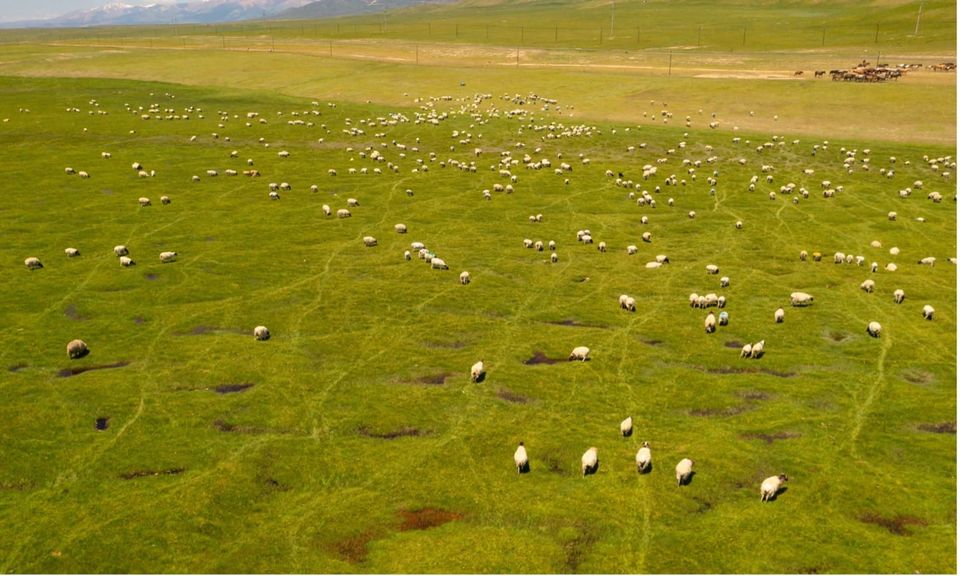
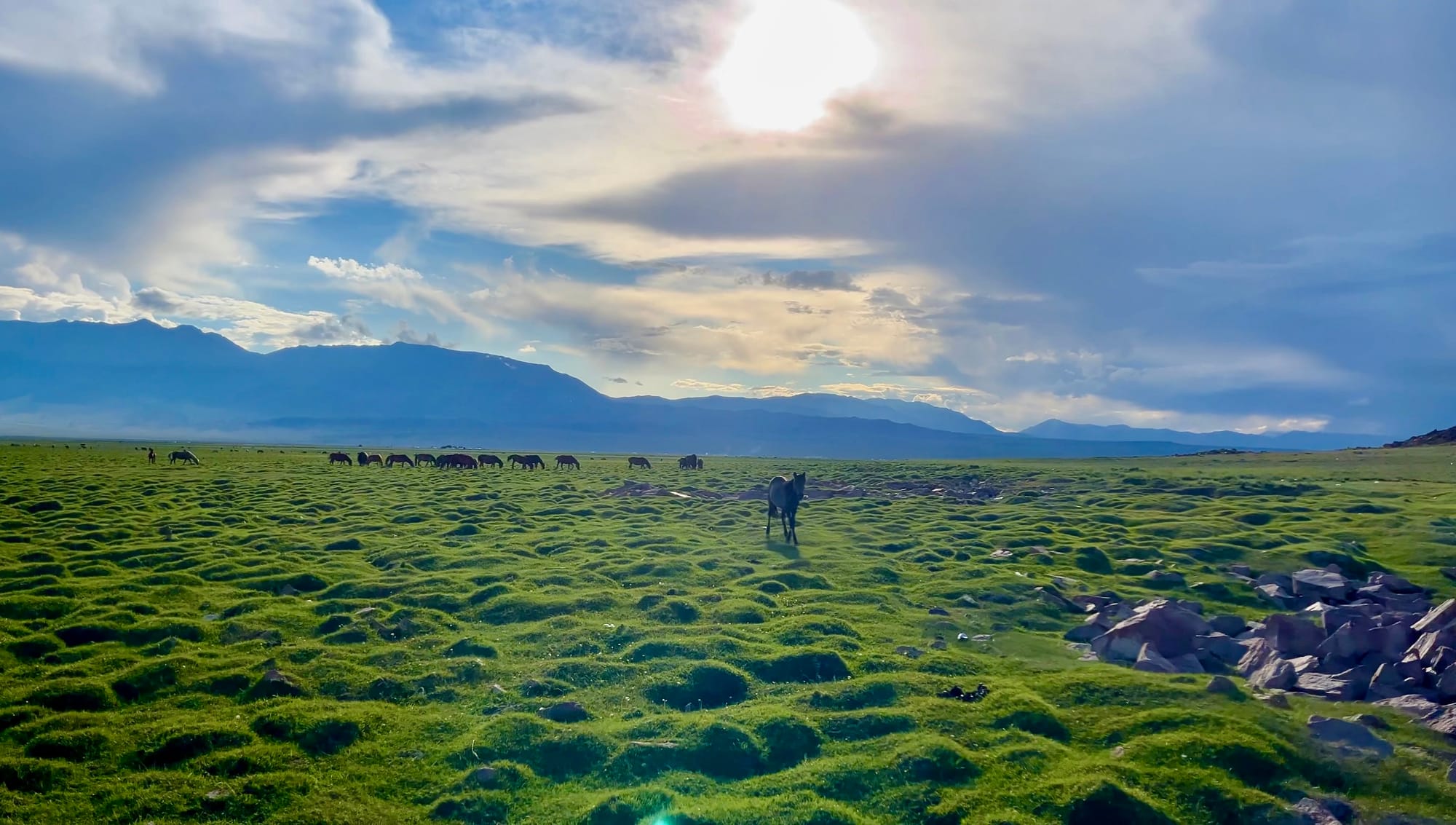
A grassland may appear healthy with abundant vegetation, yet beneath the surface, it can be a landscape in crisis. We often see livestock grazing across vast green rangelands, yet these animals can still suffer from malnutrition. How can this be the case?
The short answer is C3/C4 equilibrium. Often overlooked, a compositional equilibrium between C3 and C4 plants may be the key to identify, monitor, and predict degradation across our grasslands.
What are C3 and C4?
Over 2.7 billion years ago, photosynthesis gave life to the world we know today. Through this sophisticated process, organisms could start producing oxygen from simply carbon dioxide, water, and sunlight. These organisms, which later emerged as plants, ‘breathed in’ carbon dioxide and ‘breathed out’ oxygen. Then came animals, which breathed in the oxygen and breathed out carbon dioxide, creating a miraculous harmony.
C3 photosynthesis is a photosynthetic pathway where carbon dioxide is directly fixed to form a three-carbon compound in the mesophyll cells of plants.
Since then, C3 photosynthesis has been the dominant photosynthetic pathway. Accounting for 95% of all plants, C3 plants, like wheat, rice, oats, potatoes, and tomatoes, are common in both nature and our diet. However, C3 photosynthesis has a “glitch.” Under hot and dry conditions, its photosynthetic enzyme (RuBisCO) grabs oxygen instead of carbon dioxide, wasting energy in a process called photorespiration.
Resolving this issue, the C4 photosynthetic pathway evolved approximately 25 to 32 million years ago. C4 plants were able to prevent photorespiration and began to thrive even in hot and sunny environments. Due to their efficiency, these plants contribute to around 25% of global terrestrial carbon removal despite representing only about 5% of all vascular plant species, according to the Indian Grassland and Fodder Research Institute. They are generally more abundant in tropical and subtropical regions. However, some species also occur in cooler and drier climates such as the prairies of North America and the Mongolian steppe.
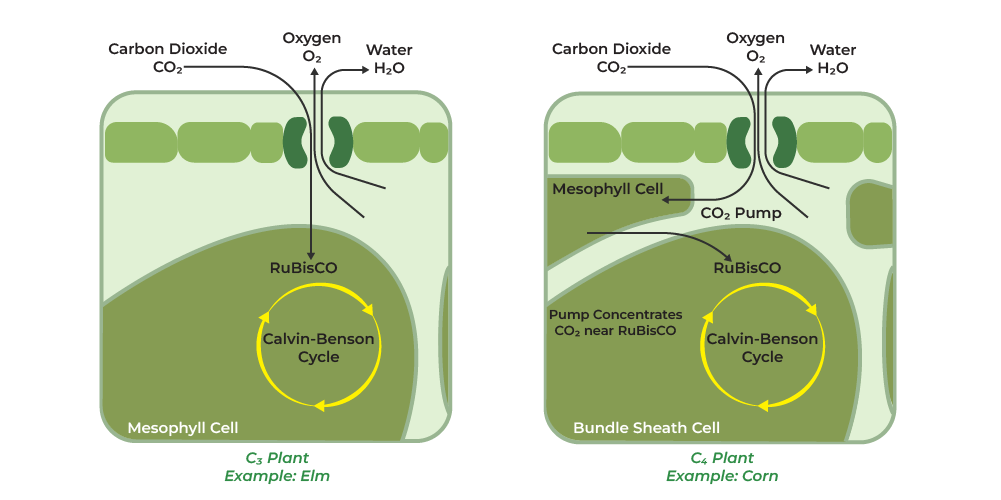
C4 is a specialized photosynthetic pathway that compartmentalizes the involved reactions. Unlike C3 plants, C4 species fix carbon dioxide into a four-carbon compound in mesophyll cells and then, transport it to bundle sheath cells, leading to higher efficiency. Due to their efficiency in hot environments, C4 plants are characterized as more drought-tolerant and climate-resilient than C3 plants.
The significance of C3 and C4 in grasslands
C3 and C4 plants coexist in grasslands with direct impacts on the ecosystem, as well as all organisms that depend on it. An equilibrium between these two vegetation types enhances ecosystem productivity, water use efficiency, quality of forage, animal productivity, carbon storage and soil nitrogen. According to a 2022 study by Northeastern University, Mongolian grasslands typically function at a C3/C4 biomass equilibrium of roughly 80%/20%.
Due to the divergent impacts of climate change on C3 and C4, grasslands are at risk of disequilibrium. While C4 plants are expanding to arid and semi-arid regions, where Mongolian grasslands are primarily located, C3 plants are becoming less abundant. As described in another 2022 study, this shift in species distribution threatens ecosystem transitions: grassland to shrubland, perennial to annual, and native to invasive species. Consequently, soil nutrients, carbon storage, and forage availability for livestock and wildlife decline, while bare ground cover, soil erosion, and dust storm rates increase across grasslands.
The alarming impacts of climate change on C3/C4 equilibrium
In 2025, an international research team at Yokohama National University studied how a dry climate impacts plant communities in the grasslands of Mongolia, using an eight-year dataset from 687 sites in Mongolia. The study demonstrated the importance of sustaining the composition of C3 and C4 plants in grasslands to protect these ecosystems. “Maintaining plant communities with a high diversity of C3 and C4 species will be key to enhancing community stability across Mongolian grasslands in a changing climate," said Professor Takehiro Sasaki, the head researcher.
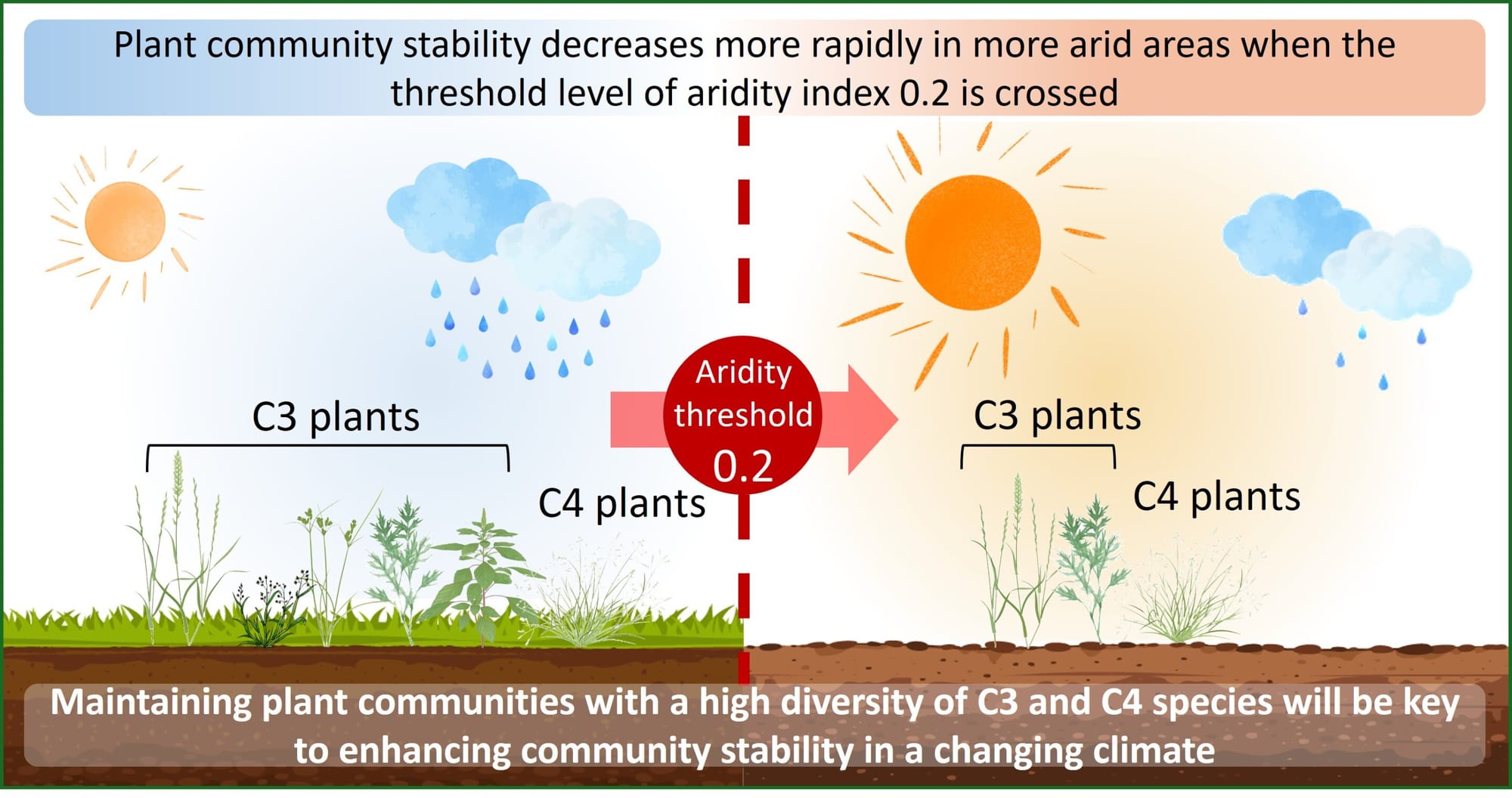
This finding suggests that the monitoring of C3/C4 composition across grasslands and support for a healthy equilibrium can serve as a protection mechanism against climate change impacts.
Moreover, a 2022 study led by Caroline Havrilla assessed how C3 and C4 grass distributions would shift in response to future climate change. The model projected a decline of C3 species abundance across 74% of tested areas. In contrast, C4 abundance increased across 66% of tested areas, especially in higher-latitude regions, where Mongolia is located, which were historically unfavorable to C4 plants due to the cold climate. The study concluded that C3 and C4 grasses will respond to climate change differently, demonstrating potential alterations in grasslands’ functional compositions.
The grazing factor in C3/C4 disequilibrium
Exacerbating the climate change impacts, livestock grazing further pushes the C3/C4 composition into a disequilibrium. Livestock often prefer C3 species because they are more palatable and nutritious. When grazing is unmanaged, these preferable C3 grasses can be eaten to depletion. Characterized as “opportunistic,” C4 species, which are less palatable for livestock, begin to expand. Consequently, the grassland loses its C3/C4 equilibrium and transforms from a high-quality pasture into a drought-resilient yet low-nutrition ecosystem.
Existing research findings confirm that year-round grazing results in a significant decrease in vegetation cover, biomass, and species diversity, which are aggravated by climate change. Thus, the dual impact of grazing pressure and climate change is likely disrupting the C3/C4 equilibrium of Mongolian grasslands, as well.
Evidence from the field: URECA’s research in Zavkhan
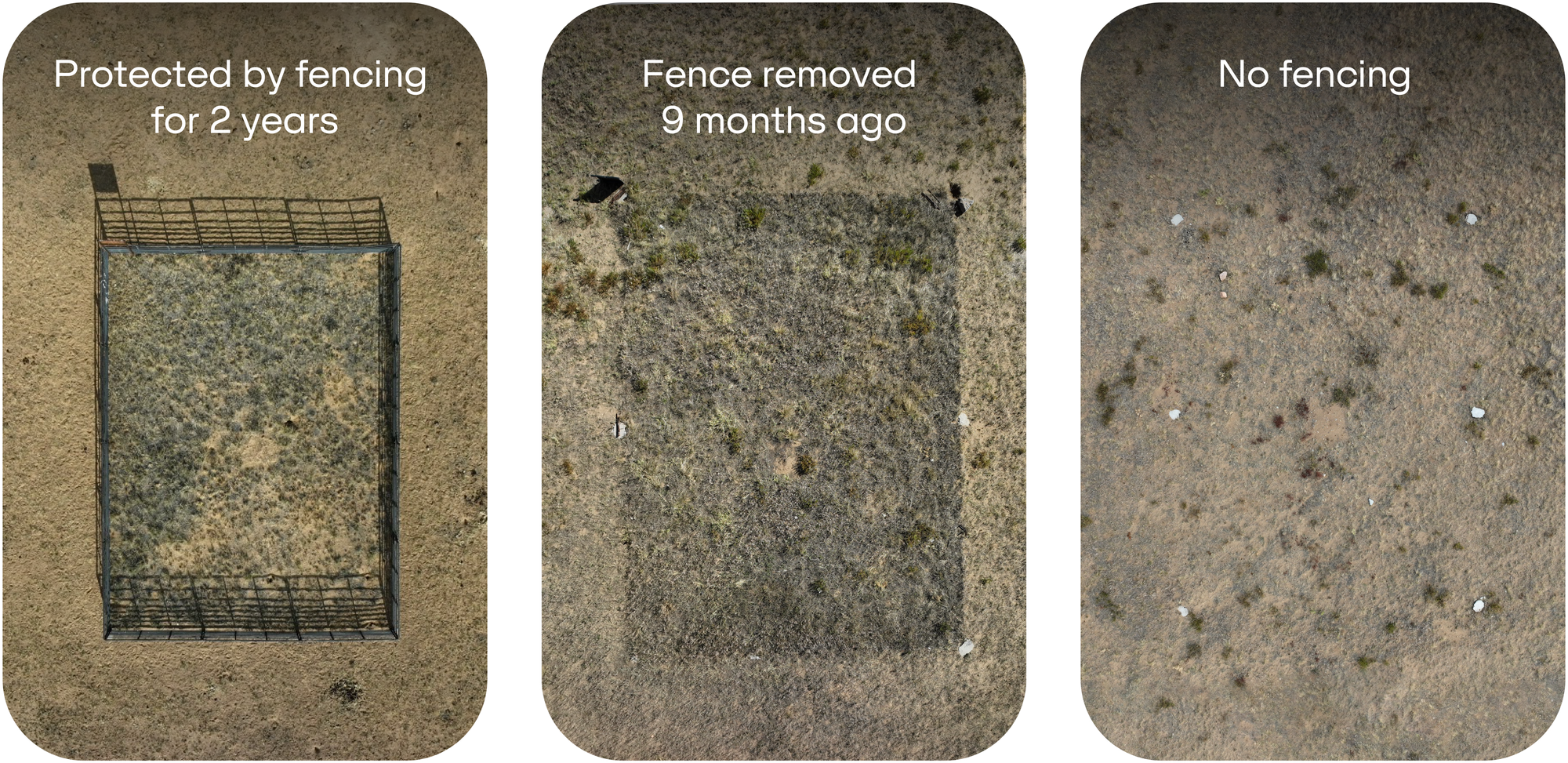
URECA’s recent research on grazing exclusions in Zavkhan Province, which was conducted in collaboration with The Asia Foundation, sheds light on the correlation between grazing pressure and C3/C4 composition. Between 2022 and 2025, the research team fenced 9 plots across Telmen, Aldarkhaan, and Tsagaanchuluut soums and monitored the changes in plant species, vegetation cover and soil organic carbon following the exclusion of grazing pressure. Although the study’s focus was not C3/C4, a follow-up analysis on the research findings indicates a noticeable increase in the percentage of C4 plants outside the fenced plots in Telmen and Tsagaanchuluut soums. This confirms that grazing pressure can reduce C3 plant composition and allow C4 species to expand.
The solution lies where tradition meets technology
Mongolia’s traditional rotational grazing practice could sustain the optimal composition of C3 and C4 species. Historically, herders followed the “4 Golden Rules” to sustainably manage their grazing areas: (1) do not exceed the carrying capacity of rangelands, (2) do not deplete the regeneration capacity of plants, (3) give plants time to recover, and (4) practice pre-planned and regulated rotational grazing. Re-introducing the traditional rotational grazing practices built on these principles could remove excessive grazing on C3 plants, provide ample time for plant recovery, and reduce the compounded pressures impacting the C3/C4 equilibrium.
However, traditional grazing practices alone are not enough. We need to measure and monitor C3/C4 composition in real-time to ensure optimal grazing management and measure effectiveness of rotational grazing. This is where dMRV technology (Digital Measurement, Reporting, and Verification) comes in. When integrated with machine learning, dMRV can allow scientific intervention to ensure a healthy grassland and support the communities and livestock that depend on it. Through this technology, we can efficiently monitor large expanses of grasslands, identify regions where the C3/C4 ratio is in disequilibrium, and implement targeted measures, such as planting of C3 grasses, to recover the equilibrium.
The answer to grassland protection is now clear: We cannot identify a healthy grassland by simply looking at how green it appears; we need to start protecting them by looking at which plants are growing there. We already have the tools to do so: dMRV combined with machine learning and traditional wisdom. Now, we need to take action.
Read about our journey on the development of a dMRV technology in the next article.
Comments ()